

Forever chemicals are in our water, soil and even our bodies. They pose serious health risks and threaten our chances of healthy ageing, yet authorities’ response has fallen short. For this reason, the environmental law charity ClientEarth filed a human rights complaint in July over Belgium’s failure to protect people’s health from widespread pollution by per- and polyfluoroalkyl substances (PFAS).
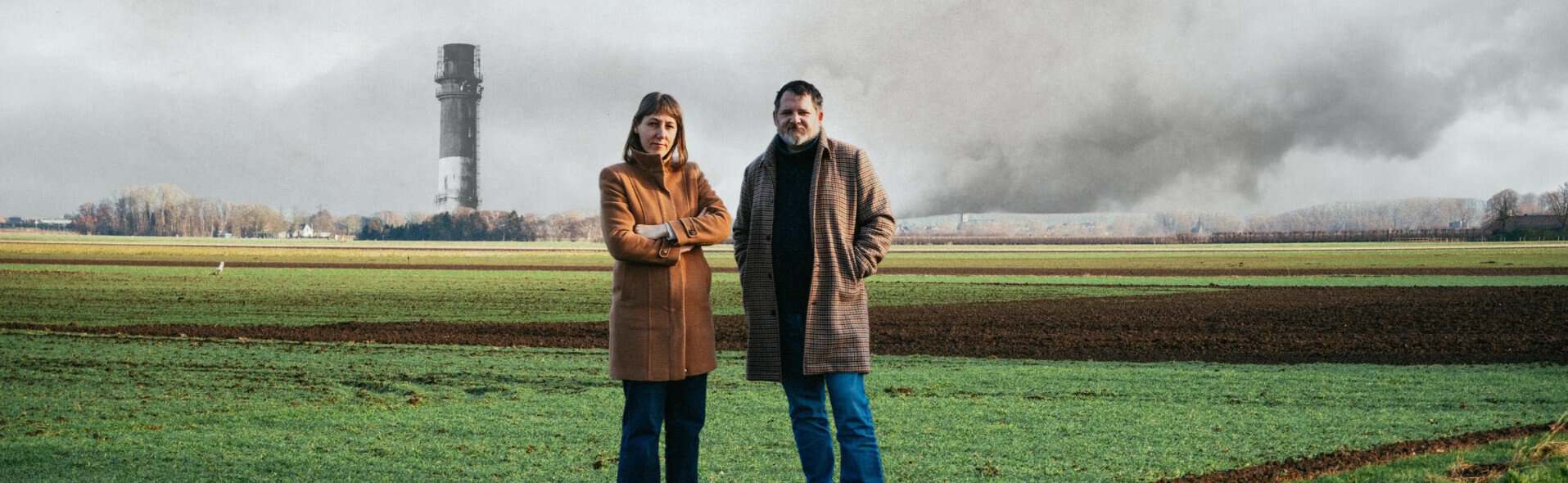
ClientEarth lawyers Hélène Duguy and Małgorzata Kwiędacz-Palosz explain why forever chemicals are a public health emergency and a human rights issue.
The people behind the statistics
Hedwig Roman grew up in Flanders, just a few kilometres from a chemical plant owned by a large company. Like many local families, hers ate fruit and vegetables from the garden and kept chickens, a cow and sheep. They ate the eggs, drank the milk, and relied on the local tap water every day. For most of her life, there was no reason to question whether those everyday choices were safe.
Then, in 2021, she learned that the factory near her home had been producing PFAS — a group of chemicals now widely known as ‘forever chemicals’ — for decades. As reports of contamination emerged, she began asking herself: could PFAS exposure be linked to some of her health challenges? Could it have affected her child? A blood test confirmed what she feared: PFAS were present in her body.
What disturbed her almost as much was the feeling that nobody had warned her. After a lifetime of trusting that public authorities would protect her health and provide information about serious risks, she felt let down.
Her story is not unique. Toon Penen lives just one kilometre from the same factory. Like many residents, he assumed that if a significant public health threat existed, authorities would alert those affected. When no warning came, alongside Hedwig and other locals, he helped establish the grassroots movement Grondrecht. Together, they spent years analysing technical documents, consulting experts, and demanding answers from authorities about the extent of contamination affecting their community. They are still waiting for the depollution of their gardens, promised by the owner of the chemical plant and the authorities.
Further south, in Brussels, Jean-Baptiste Godinot faced a similar reality after learning about severe PFAS contamination linked to a former fire-extinguisher manufacturing site. Frustrated by the lack of information and action, he and other residents formed the local campaign group, We Are Nature.Brussels, to advocate for stronger protections and accountability.
These three individuals come from different parts of Belgium. Yet their experiences tell the same story: communities learning about PFAS, witnessing public inaction and struggling to obtain the information and protection they deserve.
Pollution hiding in plain sight
PFAS are a group of more than 15,000 chemicals used in products ranging from cookware and textiles to cosmetics, pesticides, medical devices, refrigerants and firefighting foams.
Their usefulness stems from their remarkable resistance to heat, oil and water. The problem is that they are also highly persistent. Once released into the environment, many PFAS do not break down naturally and can remain in soil, water and living organisms for decades.
Scientists have linked certain PFAS to serious health concerns, including immune system effects, elevated cancer risks, hormonal disruption, reduced fertility and developmental impacts on unborn children. Growing evidence of PFAS-related health harms has prompted the EU to classify several PFAS chemicals as carcinogenic, harmful to reproduction, and damaging to specific organs. These risks can threaten people’s prospects of ageing in good health.

The scale of the problem is staggering. PFAS have been detected in water, soil, air, wildlife and food supplies across Europe and worldwide. Today, representative studies confirm near-universal exposure. The cost of cleaning up this pollution could reach a whopping €2 trillion over the next 20 years. Health care costs could amount to eye-watering sums.
Belgium has a PFAS problem
Belgium is home to the highest levels of PFAS pollution so far measured in Europe. High levels of PFAS have been found across the country, including around the 3M plant and other localities in Flanders, around an air force base in Wallonia, and in tap water in Brussels.
Evidence shows that public authorities knew about PFAS contamination years before taking action. Only after investigative reports and public pressure did authorities begin to respond — but not in all cases and not sufficiently. In 2024, a Brussels court ruled that the Flemish authorities failed to act as a ‘normal, diligent government’, despite knowing about the contamination years earlier.

It’s a public health and human rights issue
PFAS contamination is often discussed, rightly, as an environmental issue. But at a more fundamental level, it is about people's health, access to information about the risks affecting them, and trust that public institutions will protect them from harm. That is why ClientEarth, one of the few environmental NGOs with participatory status at the Council of Europe, brought a complaint before the European Committee of Social Rights alleging a violation of the right to the protection of health under the European Social Charter.
We used this specific human rights mechanism as it allows us to look beyond individual incidents and focus on the state’s systemic failures. It asks whether institutions have taken adequate steps to prevent harm, provide information to affected communities, and safeguard vulnerable groups — something anyone would naturally expect from these institutions. In our complaint, we argue that Belgium has systematically failed to protect public health and the environment from the well-documented risks associated with PFAS, with a specific emphasis on children as disproportionately affected populations.
Children's rights are directly affected by political decisions that shape environmental conditions long before health impacts become apparent. Exposure to harmful substances such as PFAS is not a matter of personal choice: children — and their families— cannot control what is in their drinking water or the quality of the environment in which they grow up and live. Whenre responsibility is shifted onto individuals and families, the greatest burden falls on those with the fewest resources, exacerbating widening avoidable health inequalities. Protecting children from environmental pollution is therefore essential not only for their immediate wellbeing, but also for their health and quality of life across the life course.
Time to act and ban PFAS
It is easy to become lost in the technical language of toxicology and regulation. But this story is ultimately about people like Hedwig, Toon and Jean-Baptiste and the many other Europeans waiting for their governments to do the right thing. Is their government willing and able to protect their fundamental rights, such as the right to health?
The Belgian government and other governments worldwide can step up now with one straightforward measure: ban all PFAS as soon as possible. Alternatives exist. People’s health and human rights are at stake.
Photo credit goes to ‘Diego Crutzen for ClientEarth’.
Keep on reading
Read about ClientEarth's landmark human rights legal complaint against the Belgian government over its failure to tackle this pollution and protect citizens’ rights to health. The lawsuit aims to force Belgium to adopt stronger measures to stop ongoing pollution and better protect communities across the country.

Hélène Duguy
Hélène Duguy is a lawyer specialised in environmental law and the rules governing chemical pollution. Before joining ClientEarth, she worked at the American law firm Squire Patton Boggs in the department dealing with environmental legal matters.

Małgorzata Kwiędacz-Palosz
Małgorzata Kwiędacz-Palosz is a Senior Lawyer in ClientEarth’s Fundamental Rights team, specialising in human rights, environmental law and public health. She develops legal approaches addressing how climate and environmental crises affect the rights to life and health. Previously, she worked at the European Court of Human Rights and Polish ministries.